Wednesday, October 25, 2017


Sunday, October 8, 2017
SPOOKY BLOOMS "These aren't your typical Halloween decorations"
Planting a Halloween garden can be a challenge here in North Mississippi, but can be attained easily in South Mississippi. For the most part, you need an enclosed garden or a way to create a microclimate within your garden. Hmmm, something a Witchy Woman or A Spooky Little Girl or a Black Magic Woman could create for you? Chances are that you already have plants in your garden with ghoulish qualities.
Are you a witch or warlock? Have you planted the right things to concoct all your potions for love, pranks or just for fun? Did you know that in days of old, you could be labeled a witch or warlock simply by the plants you grew in your garden? You know, those plants believed to be used to make potions and cast spells. Things like witches’ thimble, more commonly known as foxglove (Digitalis purpurea), a biennial with tall spikes of bell-shaped flowers in white, pink, purple or red. The entire plant is toxic and while death is a rarity, there have been some cases reported. Some symptoms of ingestion are wild hallucinations and unusual color visions with objects appearing yellowish to green, and blue halos around lights. Devil’s nettle or yarrow (Achillea millefolium) is used to make a poultice for healing wounds. The ancient Greeks used fool’s parsley, or hemlock (Conium spp.), to poison condemned prisoners, the most famous being Socrates. Aconite, better known as monkshood (Aconitum napellus), easily mistaken for horseradish, can make one nauseous and even cause death. Its spiky blue flowers are shaped like a monk’s hood and the root looks like a white carrot. Verbena was used to make a powerful love potion. Opium from poppies (Papaver somniferum) was used for sleep potions and morning glories (Convolvulaceae) for casting wicked spells. There was also an abundance of birth flowers from every month to make sure they could cast a spell over anyone. They planted three or four rows of red-blooming flowers to keep the witch hunters away.
Now that I’ve got your attention, let’s ride into the night for a look at what might be lurking in your garden. Watch your step as we walk about, careful not to step on a frog or a spider because if you do the “Wicked Witch of the Garden” just might be whipping up a potion from a strand of your hair along with frog eyes or spiders’ legs. The moonflower (Ipomoea alba), a night-blooming relative of the morning glory, fills the garden with its fragrant, large 5-6-inch white flowers that open at dusk to light your way. Moonflower planted from seed each year is a quick-growing climber with large heart-shaped leaves. Night-blooming cereus (Epiphyllum oxypetalum) is a member of the cactus family. The plant itself is not that pretty, but the flowers completely make up for that. They’re huge, fragrant and snow white, coming from “pods” that emerge from the main stem. Cereus flowers are pollinated by moths, so the blooms appear only at night. It can’t tolerate freezing temperatures, but it makes a great potted plant that can be taken outside in the spring and back inside for winter. Dusty miller (Senecio cineraria), a silvery gray plant that can be paired with anything, somewhat resembles the skeleton of a plant that used to be there. The passion vine (Passiflora incarnata), a butterfly plant that resembles a giant purple spider, can grow to 25 feet in a single growing season. Do you have that little plant called monkey cups or pitcher plants (Nepenthes spp.)? These are carnivorous and feed on small insects for the most part; however, they can grow large enough to capture small birds or mice.
 |
| The moonflower is a night bloomer that reflects the moonlight so much that it appears to emit its own light. |
With the setting of the sun, the nighttime garden awakens. Many plants bloom exclusively at night while many more wait until the cool of the evening to release their fragrance. White-flowering plants and those with variegated foliage begin to appear as if they’re lit up as they reflect the moonlight. For those of us who work by day, the garden can be a peaceful refuge in the evening and night. Our nighttime gardening friends, nectar-feeding moths and bats, come out to feed on the nectar and insects.
 |
| Te night-blooming cereus is a member of the cactus family that appears to glow in the night. |
 |
| This is foxglove, an upright biennial that is exceptionally pretty grown in clusters, which keeps them from flopping over. |
Tuesday, July 30, 2013
Getting Rid of Ants in Vegetable Garden
Ants invading your home or garden can be quite
frustrating. In the vegetable garden,
they feed on nectar-filled flowers, sweet tasting vegetables and fruits and in
the home they get into anything and everything they can. No doubt, ants can prove to be beneficial to
the gardener by feeding on destructive garden pests such as caterpillars,
spiders and small insects, but some species of ants like black garden ants live
together with the aphids for their honeydew.
In your vegetable garden ants sometimes even “farm” aphids, moving them
onto better plants. Ants collect the sweet honeydew that aphids secrete after
sucking plant sap. In this case, the
ants are actually inviting a notorious pest to come and live in the garden. Then, if that’s not enough, ants make tunnels
and nests in your soil and undermine roots. The most annoying thing about ants is they
bite you when you step on them accidentally; in fact, you won't get a chance to
wipe away the ants, as they live in groups and swarm you before you know what’s
happening.
Studying ants is an amazing lesson in survival. If ants encounter a substance that kills them
or forms a barrier, they set to work and pile up enough of each other, dead or
alive, to make a bridge to cross. Ants
are some of the more intelligent and cunning insects that man has to deal
with. Now having said all this, there
are over 14,000 ant species worldwide. Some
are useful as biological control in farming, many have painful bites and some
eat crops.
Controlling these pint sized monsters in the home and garden
is the focus here, so no matter which type of ants you have, most of them
continually scout around searching for food and if you see one, it's probably
left a scent trail and the rest of them will be on their way.
There are several methods for killing ants and I have
listed some of the most effective methods that I have found for you to try.
1-The method of drowning the garden ants with boiling
water is practical for small ant colonies. For one ant mound, you will need about 3
gallons of boiling water. Pour boiling
water in the ant hills and kill them you will.
2-Collect citrus peelings (orange, lemon, etc.) and grind
them with water and allow to sit for 24 hours. Strain the liquid and spray it over the ant
mound. This method is an effective
natural remedy for getting rid of carpenter ants and other garden ants.
3- Spraying a mixture containing borax is another effective
way to kill garden ants. For this
purpose, combine equal amounts of borax and sugar with water and spray the
mixture randomly in the garden or wherever you see ants. Sugar attracts the
ants to feed on the mixture and the borax kills the ants. Watch your eyes, nose, use gloves and wash
hands afterwards. Borax can also be mixed
with peanut butter or something sweet, such as honey, meaning when the ants eat
it, they take it back to their nest to share with other ants, hopefully
poisoning all in the nest.
4-Grits or hot cereals are a perfect choice for getting
rid of ants in the yard and garden. After
ants feed on this hot cereal, it expands in the stomach and kills them. Ok, to my knowledge this one doesn’t
work. I tried it and sat around waiting
for the ants to explode and it never happened, much to my dismay.
5-Silly as it sounds, I have been told this one
works. You can supposedly control ants
by using scented baby powder. They say any
kind of fragrance is a repelling agent for ants. So, spray baby powder, cinnamon, or pepper mixed
with vinegar to repel garden ants.
6-Diatomaceous earth will kill them and keep them away. I have not tried this remedy yet because of
the cost factor. It is pricy and I am
currently looking for a source that is affordable. This particular remedy does appear to have
the best feedback of all the organic remedies.
You can get it at the feed store and most garden centers. It is completely safe as it is very, very small
seashells. The sharp edges get between
their body joints and they "bleed" to death. They say it works on all bugs that are jointed
- or segmented. Diatomaceous earth
sprinkled on ants' trails supposedly kills ants by dehydration when they're
back in their nest.
In case, these methods do not work, you can use
insecticidal sprays. I know it’s not the
natural way to control ants but, if nothing is working, you can use chemical
insecticides for killing garden ants. Baits and mound treatments are the two best
ways to dispose of ants. Baits are the
more economical of the two and if you have patience you can get them under
control this way. Baits are usually
broadcast over the infested area with a spreader and must be done on a regular
basis, at least once a month. You can
also spot treat the mounds if you have “ants in your pants” and can’t
wait. These chemicals can be used as
sprays and also come in granules. Some
examples are Talstar, Amdro Bait, Advion, Spectracide Once and Done, Come &
Get It Bait, Sevin Concentrate Bug Killer,
Bonide Eight Insect Control, Permethrin (38% concentrate) Hi Yield 38
Plus Ortho Orthene Fire Ant Killer, Bayer Fire Ant Killer, Bengal Ultra Dust
Fire Ant Killer, and Terro Fire Ant Killer.
*Sprinkle dry product on and around mound as directed on
label. Do not disturb mounds before treatment.
*Depending on the size of the mound, it takes 1 to 2
gallons of water-insecticide.
As always please read the labels and follow them to the
letter, remember more is not better.
When spraying chemical of any kind, please wear protective clothing and
eye protection.
If you have any questions or comments, send me an email
at thatgardeninguy@hotmail.com .
Happy Gardenin’ and Keep Diggin’ in the Dirt.
Thursday, July 12, 2012
Hydrangeas
July is here
and that means water, water, water your garden.
We have had some good rain in past weeks, but with the heat steady coming
on and no rain to speak of in the last four weeks you will still need to
water. Plants need a good inch to inch
and a half of water a week. Containers
will need more than that in the extreme heat, probably at least once a day if
not twice a day. The shade garden will
also need that extra drink of water because plants will be competing with trees
for water and nutrients.


Hydrangeas are fussy
plants this time of year due to extreme heat.
Do I water or do I not water? The hydrangeas are wilted when I get home,
but in the morning they look normal.
Hydrangeas need water, but not too much water. They require well drained soil and about six
hours of sunlight. If you give them too
much water it will encourage disease.
They are prone to root rot and fusarium wilt when they get and keep wet
feet, so before you plant your hydrangeas, amend the soil to help with
drainage. Root rot is exactly what it sounds like, the root system get soaked
for extended periods of time and rots away.
Fusarium wilt is a soil born pathogen and develops a fungus which clogs
up the vascular system of the plant and keeps it being able to take up
water. The leaves will start to yellow
and wilt from both of these conditions and make you think they need water when
they don’t. There is no real cure when
they get to this point, except to shovel prune them. Hydrangeas are also susceptible to leaf spot,
blights, and powdery mildew. These
problems are best controlled also by water management along with well drained
soil. A good fungicide can also help
with these. I would recommend daconil
combined with mancozeb. After speaking with a plant pathologist friend today, he recommends that a systemic fungicide containing the active ingredient propiconazole. I have observed
these problems in my own landscape. I
have lost a couple of my hydrangeas, but managed to correct the problem and
salvage the rest of them. This problem
also affected the homestead verbena and we lost a good sized area of that too. I have always been content not to prune
hydrangeas except to get flowers for drying.
A good friend who is a gardener’s gardener, laughingly told me that is
why the ones up next to the door bloom so profusely. He says to prune them when the blooms start
to fade and this will promote new growth which will give more blooms. He did agree that you should not prune the
ones that bloom on old wood after the end of July as they start setting their new
flowering buds at this time.
Despite all
this about disease, hydrangeas are relatively easy to grow. Prepare the planting site by adding at least half
again organic matter and you should have years of enjoyment from your hydrangea
plant. Fertilize them in March, May, and July with a good general purpose
fertilizer such as 8-8-8, 10-10-10, or13-13-13.
Be careful not to add nitrogen rich fertilizer as this could keep them
from producing blooms. Water in the
morning and preferably use a drip system as opposed to watering overhead.
If you have
any questions or comments, send me an email at colorsbytim@hotmail.com or leave me a message at the Union County Extension Office
at 662-534-1916. You can also find me on
Facebook, mastergardner, and Saturday mornings from 8:00AM to 9:00AM on WNAU
Radio 1470 on the radio dial or listen online at www.wnau1470.com
Happy
Gardening and Keep Digging in the Dirt.
Thursday, June 21, 2012
Victory Gardening
Victory Gardening


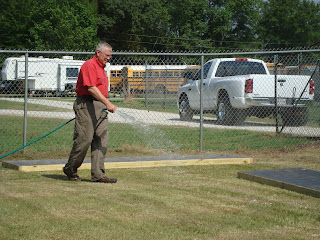

(Tim Burress, Mississippi Master Gardener)
My
friend, Carl Wayne Hardeman, has been teaching me about Victory Gardening and
giving away the food without taking a bite for myself for over two years
now. The Collierville Victory Garden has
averaged around 4000 pounds of food a year on 1/10th of an acre and
every bite of it goes to charity.
Stanley
Wise and I have been talking about a project like this at great length for over
a year and we decided that this would be year to make this project begin to happen. We spoke with the Union County Fair Board and
they gave us permission to do this project at the fairgrounds based upon the
facts that the food would be given to the less fortunate.
This
project would also be used as a teaching garden. Originally we were going to
plant corn, but the challenge here was figuring out how to keep the critters
from getting more of the corn than the needy so this required a new plan.
Stanley
had been playing with this new, old idea of “No-Till Mini Gardening.” This plan
seemed more practical and the crop, now tomatoes, squash, and cucumbers would
produce more food in less area and could be contained easier. No-Till Gardening is not new, but is new
again and is ideal for the gardener with limited space and time. We built frames twelve feet long and three
feet wide with a brace in the middle out of pressure treated two by fours. Next we secured landscape fabric on the
bottom of the frames. Next we selected a
space that is relatively flat, has good drainage, and would have at least six
hours of sunshine a day. The grass was
mown down as close as possible and then the area was fertilized. The formula devised by Stanley is as follows: one
cup of triple thirteen, one cup of calcium nitrate, one fourth cup of 0-0-60,
and four cups of pelletized lime. Spread
this mixture, water in liberally, and then place your frame on top of this
area. It is recommended to place stakes
in each corner to keep the frame in place.
Take a knife or a pair of scissors and cut an X in the fabric, then dig
a hole, and place the plants in the hole. We used a small auger in a cordless drill to
dig our holes. In our frames we planted
two rows of six tomatoes and spaced them two feet apart. We added composted leaves to the dirt when we
planted to richen the soil. The squash and cucumbers were planted farther apart
to give them room to run. Peppers were
planted in the corners of the squash and cucumber frames as they don’t require
much room.
The
mini garden frame with the landscape fabric attached will now serve as a mulch
to prevent the need for weeding and will cut down on the chances of fungal
diseases. You can also add decorative
mulch on top if you desire to make the frames more esthetically pleasing to the
eye. The mini garden frame is reusable from year to year and can be moved to a
new location each year if desired. Once
the tomatoes are tall enough we will be staking them with 3/8th
rebar and string in a fashion known as the “Florida Weave.” The rebar stakes will be driven and string
woven in a figure eight pattern to hold the plants off the ground. The stakes since they are metal will also be
reusable from year to year.


This
garden is funded by grants given to the Union County Master Gardeners by The
New Albany News Exchange, Walmart DC, and the Union County Development
Association. The area used for this
garden was provided by the Union County Fair Board and the Board of
Supervisors.
This
garden will also be a part of our teaching gardens and tours are welcome. Stanley Wise has written an in depth
publication (The Amazing No-Till Mini Garden) if you would like further
information. If you would like to tour
our No-till Mini Garden and/or Hoop House, call the Union County Extension
Office at 662-534-1916.
Happy
Gardening and Keep Digging in the Dirt!
Sunday, May 20, 2012
That Gardenin Guy: Compost, Compost, Compost
That Gardenin Guy: Compost, Compost, Compost: Composting, everyone is talking, thinking, or going to do it. It is the right thing to do, our ancestors did it and we should be doing it ...
Compost, Compost, Compost
Composting,
everyone is talking, thinking, or going to do it. It is the right thing to do,
our ancestors did it and we should be doing it too. Composting is a good way to improve your
soil, while disposing of your kitchen, lawn, and garden waste.
Why rake and
bag those grass clippings and leaves for the trash man to pick up when you can
put them in the corner of your yard along with leaves and vegetable scraps to
make rich living soil. You can even add
your old newspapers and magazine to the pile, although I would recommend
shredding them first. As all this waste decomposes, you are making dirt, which
when added to the hard red clay that we have around here will make better,
richer dirt.


There are several
ways or methods to compost. Out on the
Burress Plantation, we have several compost piles going. We have one down at the foot of the hill
where we put all the big stuff such as tree limbs and dead shrubs and other
larger debris. This pile is for things
that don’t decompose very fast. The next
pile is about eight foot by eight foot.
This is where we put leaves, grass clippings, and vegetable and fruit
scraps. I keep a shovel down by this
pile and turn it over every time I add to it or at least twice a week. This pile decomposes relatively fast and I am
able to harvest composted soil from it about once a month. I usually add some nitrogen to this pile and
about once a month I add a product called Carbon Boost to the pile to help it
work a little faster. The next compost
pile is a little closer to the house and is a bin that my Adorable Wife made as
an experiment. She took a thirty gallon
trash can and drilled one half inch holes all in the sides and also in the
lid. The lid is a snap on lid and fits
tight to prevent critters from getting in to it. She adds layers of grass clippings, leaves
and food scraps to it along with some water about once a week. She rolls the can over once a day to keep it
stirred or fluffed. She is able to
harvest her composted material on the average about every two weeks. Last but certainly not least is the compost
bin that we keep on the porch. This is a
big blue tub with a lid that snaps on and is also Wiggles home. We bought a tub and lid which can be
purchased at any of the big box stores and drilled one eighth inch holes all in
the top. Next we shredded some newspaper
and put in the bottom and wet it lightly.
Next we added a couple of shovels full of peat moss, then some vegetable
and fruit scraps, and this is where we put most of our egg shells and some
coffee grounds. At this point we added
about two or three hundred red wiggler worms, tossed in a cup of corn meal and
then topped it off with some more shredded newspapers that have been lightly
misted with water. We add shredded
newspapers and food scraps once a week and toss with a trowel. This bin will yield about ten gallons of
composted materials every six weeks or so that have been enriched with worm
poop. This compost, commonly known as
worm castings is an excellent organic fertilizer and soil amendment.
In
conclusion, I believe composting is something that everyone should be
doing. They even make small composting
containers that you can use and leave on the kitchen counter. This would be a good item for apartment
dwellers to make organic fertilizer for their houseplants. There are many kinds of compost bins
available for sale at your local nursery or home improvement center or you can
do like Ms. Janet and I do, make your own.
If you have
any questions or comments send me an email at colorsbytim@hotmail.com or leave me a message at the Union County Extension Office
at 662-534-1916. You can also tune in to
WNAU Radio 1470 on your AM dial or log on to www.wnau1470.com select streaming and choose your
player Saturday mornings at 8:00 AM where I will take your call for gardening
questions at 662-534-8133.
Happy
Gardening and keep digging in the dirt and compost, compost, compost.
Subscribe to:
Comments (Atom)